Home / Mumbai-guide / Mumbai Food / Article /
mid-day turns 40: The Argumentative City
Updated On: 28 June, 2019 07:07 AM IST | Mumbai | Kaiwan Mehta
Architect Kaiwan Mehta is a visual culture theorist who has critiqued the city via how its buildings have evolved; here he explores how the city's design language has shaped our relationships with each other



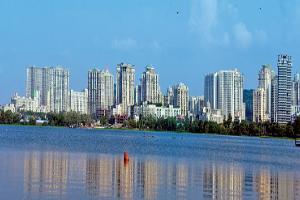
In the early 1990s, emerged the suburbs known as Hiranandani Powai - an architecture that built homes for the new yuppy migrant, coming for a job in call centres or corprorate banks. Pic /Rane Ashish
 Every city has a specific nature and character and we all talk about it – but where is it that a city gets its specific attitude and mannerisms? All cities are defined by specific historical moments, and even though they all live through similar histories, certain events define certain cities more specifically – Delhi, for example, is defined by its Mughal history, architecture, and planning, after which the influential moment has been the Lutyen's intervention and move towards a free nation, and that too partitioned! Whereas Bombay and Calcutta have been essentially cities of the 19th century; Bombay was defined by industrialisation and the establishment of the first railway lines in Asia, here in the mid-19th century, after which the next defining moment has been in the 1990s. The last 40 years have redefined Bombay into Mumbai – the city of trade and business, internationalism and cosmopolitanism shifted towards a new notion of what it means to be urban and Indian, it's public and private life both changed.'
The mills shut down in the 1980s and in the next 10 years, the land geography of Mumbai was shifting; 1992-93 saw one of the worst riots in the city's history following the demolition of Babri Masjid and the claim over praying in public space through the Maha-aarti campaigns, followed by the first of the serial bomb blasts in March 1993. These cumulative narrative of events finally saw its pitch in the renaming of the city to an imagined regional past – calling it Mumbai, rather than the more cosmopolitan memory existing within Bombay. Mumbai, Bombay, Bambai, are all names of a city that has hosted and housed tongues and hands not only from all over the Indian sub-continent, but all over the world. The last 40 years have seen a move towards rewriting the history of the city, as well as writing a new memory. These events no doubt are simultaneous with the rise of the Heritage Conservation movement of the city, while mill lands became mall enclaves and rampant slum demolitions cleared lands for call centres and gated housing communities. There was even a policy for clearing out old memories – it was called Slum Redevelopment, where many different kinds of old housing types were declared slums and demolished to give way to new lifestyles and new aspirations. Change is never a problem, cities change all the time, but the brutality of change – physical as well as psychological, is the problem.'
Trending Stories
Latest Photos
Latest Videos
Latest Web Stories
ADVERTISEMENT
Mid-Day Fast
ADVERTISEMENT

ADVERTISEMENT